UniPar: A Unified LLM-Based Framework for Parallel and Accelerated Code Translation in HPC
Introduces UniPar, an evaluation framework for assessing how large language models translate between parallel programming languages, achieving 69% compilation success and 33% functional correctness through fine-tuning and compiler-guided repair.
Abstract
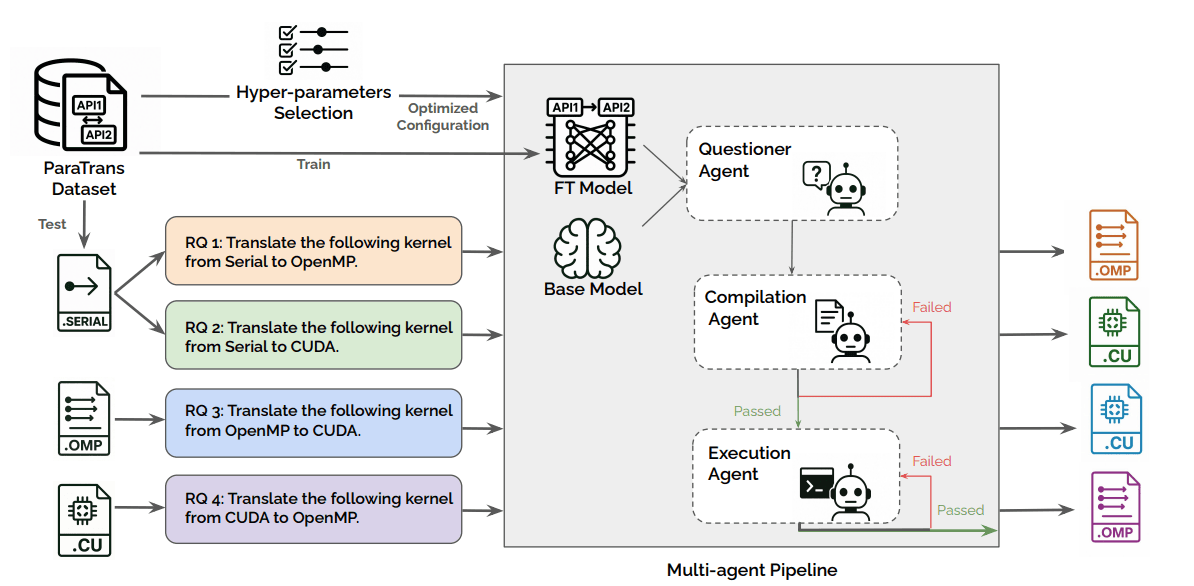
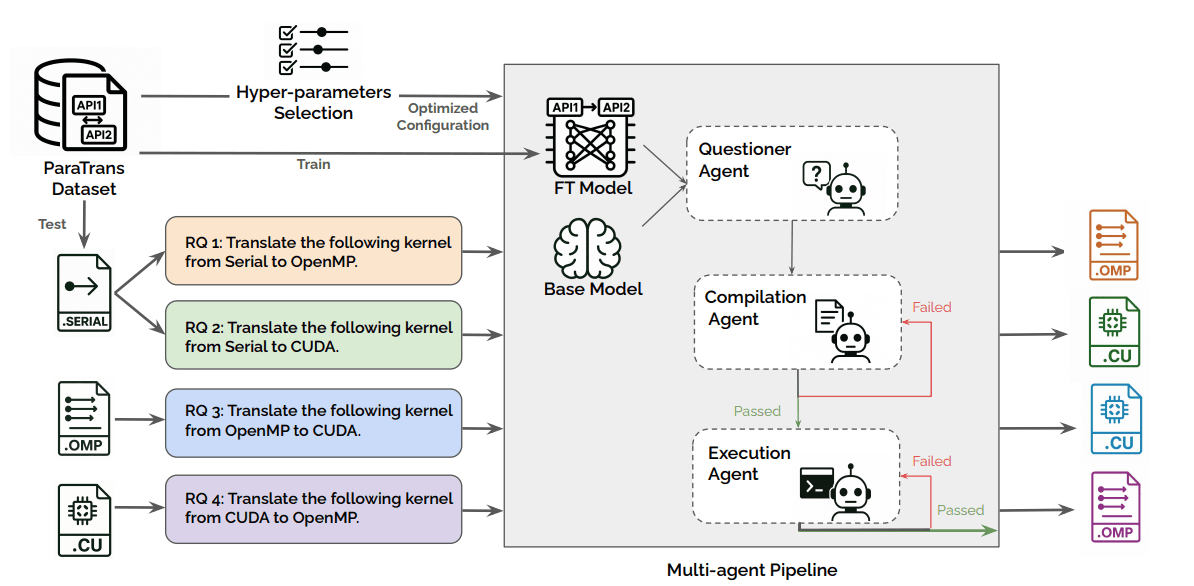
This research introduces UniPar, an evaluation framework for assessing how large language models translate between parallel programming languages. The team targeted translations between serial code, CUDA, and OpenMP, testing models like GPT-4o-mini and LLaMA-3.3-70B-Instruct. Their approach combined fine-tuning, hyperparameter tuning, and compiler-guided repair, improving performance from 46% to 69% compilation success and 15% to 33% functional correctness. They also created the PARATRANS dataset covering serial-to-parallel and cross-paradigm code transformations, with both code and data made publicly available.
Related Research
The Trust Problem Has Shifted: What Formal Verification Can and Cannot Guarantee About AI-Generated Code
A clear-eyed technical assessment of formal verification for AI-generated code: which approaches are credible, what barriers remain, and where the market will emerge first.
The Real Cost of Leaving NVIDIA
What Automated Transpilation Actually Costs, and What It Doesn't